Most bettors focus on players, pace, and matchups. However, one overlooked variable in NBA betting is officiating. Referees influence foul rates, free throw volume, game flow, and ultimately scoring distribution.
While officials do not determine outcomes intentionally, their tendencies can shift possession value, pace, and efficiency. Therefore, understanding how referees affect NBA betting markets can improve totals analysis, spread evaluation, and player prop projections.
Still, referee data must be used carefully. Not every trend creates edge.
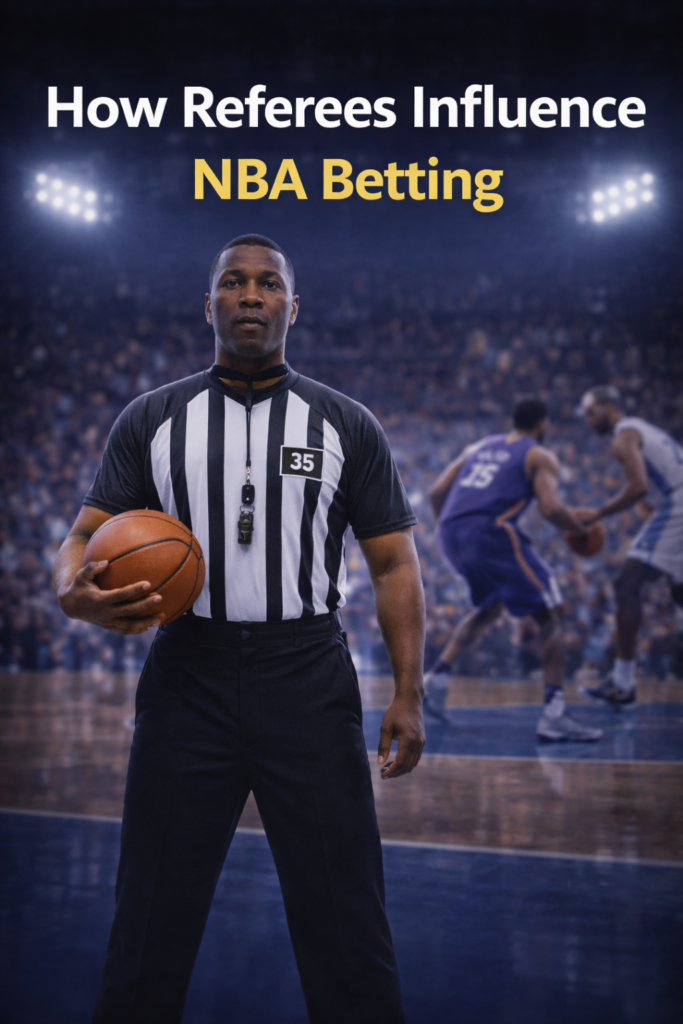
Why Referees Matter in the NBA
Basketball is officiated differently than football or baseball. Fouls directly result in free throws. Free throws stop the clock. Stoppages alter rhythm. As a result, refereeing style can meaningfully influence scoring patterns.
Some officials call games tightly. Others allow more physical play. Over the course of a season, this creates measurable variation in:
- Personal fouls per game
- Free throw attempts
- Technical fouls
- Pace interruptions
According to publicly available NBA officiating data and studies discussed by platforms such as Basketball Reference, games with higher foul rates tend to produce more free throw attempts and, consequently, slightly elevated scoring totals.
However, the relationship is not always linear.
Referee Impact on Totals
Referees most directly affect totals betting.
When officials call games tightly, the following often occur:
- Increased free throw attempts
- More clock stoppages
- Higher scoring efficiency per possession
Because free throws are high percentage scoring opportunities, totals may inflate slightly under foul heavy officiating.
Conversely, when officials allow physical defense, scoring efficiency may decline. Games flow more naturally. Contact goes uncalled. As a result, under outcomes become slightly more likely.
However, sportsbooks are aware of referee tendencies. In high profile games, they often price in known officiating styles.
Therefore, referee trends must be evaluated alongside pace and offensive efficiency projections. Platforms such as https://www.theover.ai/ model scoring environments primarily through tempo and efficiency metrics. Referee influence becomes a secondary adjustment layered onto projected possessions and scoring rates.
Probability still determines value.
How Referees Affect Pace
Although referees do not directly control tempo, they influence stoppages.
More fouls mean:
- More free throws
- More inbound plays
- More half court possessions
This can slightly reduce natural pace but increase points per possession due to free throw efficiency.
Therefore, pace of play and referee tendencies interact in subtle ways.
If you have not reviewed how tempo affects scoring, see How Pace of Play Affects Totals Betting because pace remains the primary driver of NBA totals.
Referees modify flow. Pace determines opportunity.
Referee Influence on Point Spreads
Referees can also impact point spreads, especially in close games.
Late game foul sequences can inflate margins. For example:
- Intentional fouls extend games
- Free throw variance creates small swings
- Technical fouls shift momentum
In games projected to be close, officiating style may slightly increase variance. That can influence whether favorites cover.
However, this effect is generally smaller than pace or matchup advantages.
Understanding variance is important here. If you need deeper context, review What Is Variance and How Does It Affect Bettors?
Player Props and Foul Sensitivity
Referees can significantly impact player prop markets.
For example:
- A tightly officiated game increases foul trouble risk
- Star players sitting with early fouls reduce scoring output
- Defensive intensity changes shot volume
If a high usage player picks up two early fouls, rotation patterns shift. Minutes decline. Usage redistributes.
Therefore, referee tendencies can indirectly influence:
- Points props
- Rebounds
- Assists
- Free throw attempts
However, these effects are conditional. Not every tightly called game produces foul trouble for key players.
Prop betting requires precise probability modeling rather than broad assumptions.
Are Referee Trends Predictive?
This is where caution becomes essential.
While referee data shows variation in foul rates, predictive power is limited if sample size is small. One or two high foul games do not establish a long term pattern.
Additionally, game context matters:
- Playoff games often have different officiating standards
- Rivalries may produce more physical play
- Coaching complaints can influence officiating emphasis
Therefore, referee trends should be treated as marginal adjustments, not primary betting signals.
If you want to understand how to evaluate whether data creates real advantage, review What Is an Edge in Sports Betting?
Market Efficiency and Referee Data
Modern NBA betting markets are highly efficient. Widely known referee trends are often already reflected in totals.
For example, if a specific officiating crew consistently produces higher free throw rates, sportsbooks adjust opening numbers accordingly.
However, late crew assignments or subtle mismatches may create small inefficiencies.
Still, those inefficiencies are typically minor compared to pace or injury adjustments.
If you want to understand how markets incorporate information, see What Is Market Efficiency in Sports Betting?
Common Mistakes Bettors Make With Referees
Many bettors overestimate referee impact. Common errors include:
- Blindly betting over when a high foul referee is assigned
- Ignoring pace and matchup context
- Overreacting to short term foul trends
- Treating officiating as primary driver rather than modifier
Referees influence margins. They rarely determine them.
Therefore, disciplined modeling remains critical.
Final Thoughts
Referees influence NBA betting by affecting foul rates, free throw volume, and game flow. Tight officiating can increase scoring efficiency. Physical officiating can reduce it.
However, referee impact is typically secondary to pace, efficiency, injuries, and matchup dynamics.
In totals markets, referees act as modifiers. In spread markets, they slightly affect variance. In player props, they influence minute distribution and foul risk.
Ultimately, officiating style is one variable among many. It should refine projections, not replace them.
In NBA betting, probability drives value. Referees adjust probability. But they do not override it.