One of the most frustrating experiences in sports betting is doing everything “right” and still losing. You research games, beat the closing line, place value bets and yet your bankroll keeps dipping. This often leads bettors to question their strategy, models, or even their understanding of betting altogether.
The truth is simple but uncomfortable: losing streaks can happen even when your picks are objectively good. This isn’t bad luck or failure it’s a natural outcome of probability, variance, and market dynamics.
Understanding why this happens is essential if you want to survive long enough for your edge to materialize.
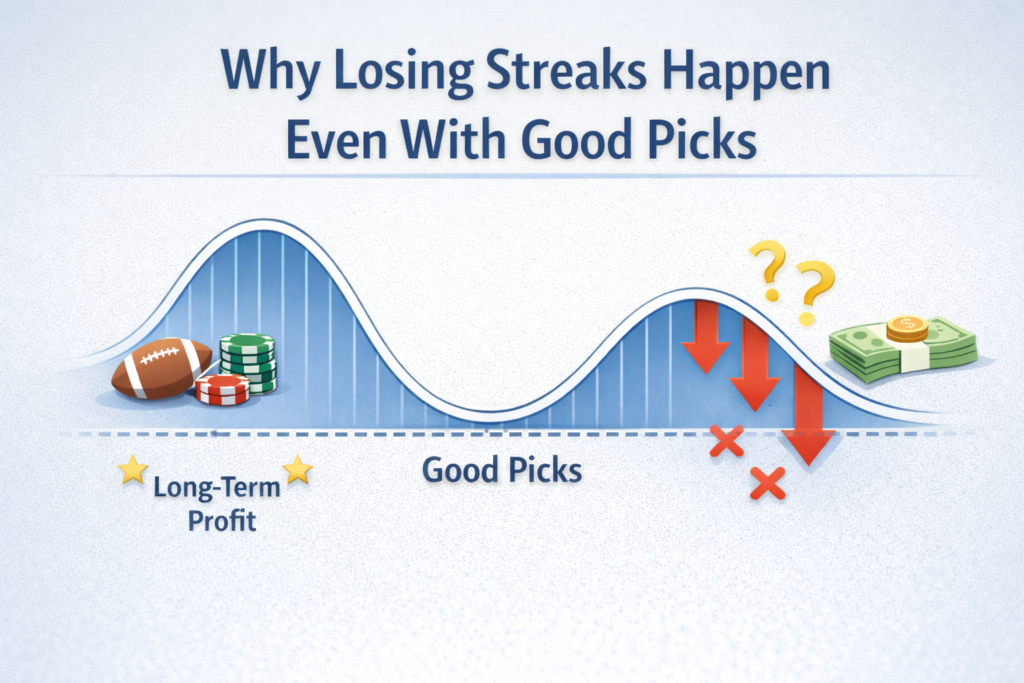
Variance Is the Primary Culprit
The biggest reason losing streaks happen even for profitable bettors is variance.
Variance describes the natural fluctuation between short-term results and long-term expectations. Even if you consistently place positive expected value bets, outcomes will not line up neatly in the short run.
If you’re unfamiliar with the concept, this foundational guide explains it clearly:
What Is Variance and How Does It Affect Bettors?
Example:
- You place 100 bets with a true 55% win probability.
- In theory, you should win 55 bets.
- In reality, you might win only 45 or 65 depending on randomness.
A losing streak doesn’t mean your picks were bad. It often means variance is temporarily working against you.
Expected Value Does Not Guarantee Immediate Wins
Many bettors mistakenly believe that having an edge means winning more often right now. That’s not how probability works.
Expected Value (EV) measures profitability over the long run, not over 10 or 20 bets.
A +EV bet can lose and sometimes several times in a row without invalidating the logic behind it.
Example:
Betting a coin that lands heads 55% of the time can still produce 5 or 6 tails in a row. The edge exists, but outcomes are independent.
Regression to the Mean Creates Psychological Traps
Another reason losing streaks feel confusing is regression to the mean.
When bettors experience a hot streak, they subconsciously believe they’ve “figured something out.” When results normalize or swing the other way it feels like something broke.
Regression doesn’t mean you suddenly became worse. It means results are drifting back toward their long-term average.
This effect is especially brutal after:
- Hot streaks
- New strategies
- Switching betting styles
Market Efficiency Limits Short-Term Edges
In highly efficient betting markets, even sharp bettors experience extended drawdowns.
Major leagues like the NFL, NBA, and EPL absorb information extremely fast. Odds reflect near-accurate probabilities, leaving only thin edges.
In efficient markets:
- Small edges = higher variance
- Losing streaks last longer
- Results feel random despite strong logic
For context on how this works, Investopedia explains market efficiency clearly.
This is why many sharp bettors focus on:
- Player props
- Niche markets
- Early lines before public money arrives
Poor Bankroll Management Amplifies Losing Streaks
Sometimes the issue isn’t the picks it’s bet sizing.
Even with good selections, betting too large during variance swings can:
- Drain bankrolls
- Force emotional decisions
- End otherwise profitable strategies
Good bettors think in units, not emotions. A losing streak should reduce confidence only if:
- You’re consistently missing value
- You’re losing closing line value
- Your assumptions are flawed
Otherwise, it’s just noise.
Psychological Bias Makes Losses Feel Worse Than Wins
Losses hurt more than wins feel good. This is called loss aversion, and it distorts how bettors perceive streaks.
Three losing days feel catastrophic.
Three winning days feel “normal.”
This bias often causes bettors to:
- Abandon profitable strategies
- Chase losses
- Overreact to short-term results
Data-driven tools like TheOver.ai help counteract this by showing:
- Long-term performance
- Closing line value trends
- Market movement patterns
Seeing the bigger picture keeps emotions from hijacking decision-making.
Closing Line Value Matters More Than Results
If your bets consistently beat the closing line, you are doing something right even if results don’t reflect it yet.
Sharp bettors judge themselves by:
- CLV
- Price accuracy
- Decision quality
Not by yesterday’s wins or losses.
As professional bettors often say:
“You can do everything right and still lose that’s not failure, that’s probability.”