In sports betting, outcomes are noisy in the short term. Even the best bettors experience losing streaks due to variance. Because of this, judging performance solely by wins and losses can be misleading. One of the most reliable ways to evaluate betting skill is Closing Line Value (CLV) specifically, whether you consistently beat the closing line.
Beating the closing line doesn’t guarantee short-term profits, but over time it is one of the strongest indicators that a bettor is making high-quality, value-driven decisions.
What Is the Closing Line?
The closing line is the final odds or point spread offered by sportsbooks just before an event begins. By this point, the market has absorbed:
- Public betting volume
- Sharp (professional) money
- Injury and lineup news
- Weather and situational updates
Because it reflects the most complete set of available information, the closing line is often considered the most accurate price the market produces.
What Is Closing Line Value (CLV)?
What Does It Mean to Beat the Closing Line?
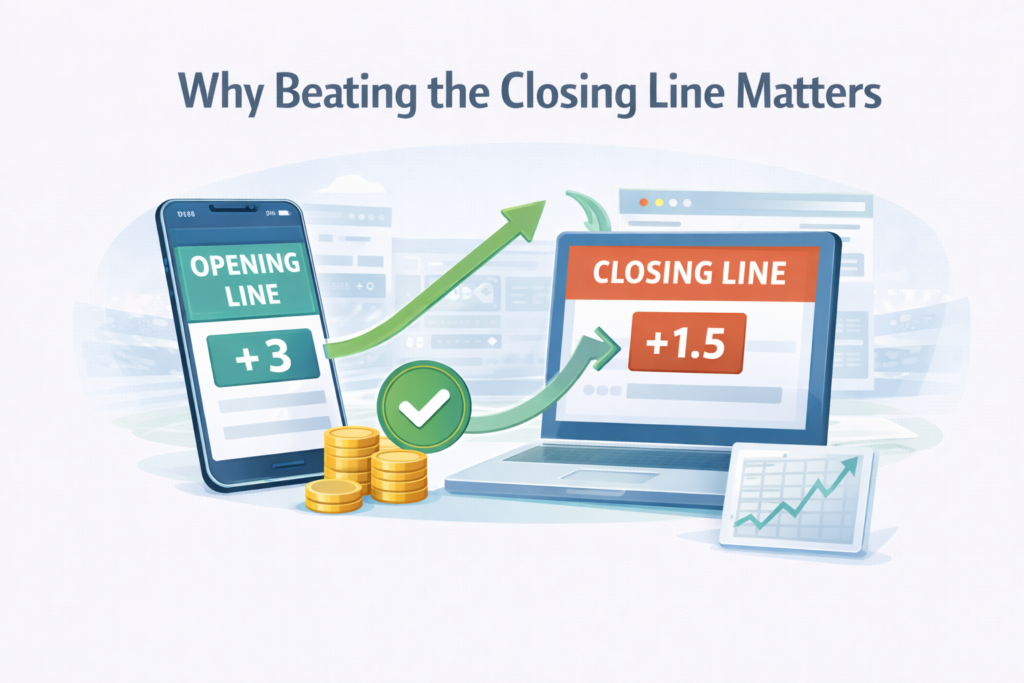
You beat the closing line when the odds or line you bet are better than the final market price.
Examples:
- You bet a team at +3, and the closing line is +2
- You bet at +120, and the closing odds move to +105
In both cases, the market later agrees that your position was stronger than what’s available at kickoff.
Why the Closing Line Is a Benchmark for Skill
Sports betting market especially in major leagues are relatively efficient by game time. If you can regularly secure better prices than the closing line, it suggests that:
- You identified value before the market adjusted
- Your information or timing was superior
- Your betting process is sound
This is why many professional bettors evaluate success by CLV first, profit second.
Beating the Closing Line vs Winning Bets
Winning bets in the short term can be influenced heavily by variance. Beating the closing line, however, focuses on decision quality rather than outcomes.
| Metric | What It Measures | Reliability |
|---|---|---|
| Win/Loss Record | Short-term results | Low |
| Profit | Outcome + variance | Medium |
| CLV | Price quality | High |
A bettor can lose money over a short stretch while still consistently beating the closing line. Over the long run, that bettor is far more likely to be profitable than someone who wins by chance but consistently takes worse prices.
Why Beating the Closing Line Leads to Profit Over Time
Odds represent probabilities. If you consistently bet at prices that later move against you, you are effectively buying probability at a discount.
Example:
- You bet at odds implying a 48% chance
- The closing line implies a 52% chance
That difference is the foundation of long-term profitability. Positive expected value combined with consistent CLV tends to compound over large sample sizes.
How Bettors Beat the Closing Line
Common ways bettors gain CLV include:
- Acting early before lines fully adjust
- Reacting faster to news than the broader market
- Specializing in niche leagues or markets
- Line shopping across multiple sportsbooks
Importantly, CLV is not about predicting outcomes it’s about price discipline.
Limitations of Closing Line Value
While CLV is powerful, it is not perfect:
- Some markets move late due to public money, not accuracy
- Low-liquidity markets can have misleading closing lines
- Promotions or boosted odds can distort CLV comparisons
CLV should be evaluated over many bets, not a handful.
Tracking Closing Line Value
To track CLV accurately, bettors should:
- Record the odds or line at the time of the bet
- Compare it to the consensus closing line
- Review CLV trends over time, not game by game
Tools like TheOver.ai help bettors monitor CLV alongside ROI and bet type performance, allowing for objective evaluation rather than emotional reactions.
Conclusion
Beating the closing line matters because it measures how good your bets are at the moment you place them, not whether luck went your way that day. While short-term results fluctuate, consistently beating the closing line is one of the clearest signals that a bettor has a real edge.
In sports betting, outcomes are uncertain but prices are measurable. Focus on beating the number, and profits are far more likely to follow over time.