In sports betting, success is often measured by consistency over time, not just one-off wins. One concept that helps explain this is regression to the mean. Understanding this principle can prevent bettors from making costly mistakes based on short-term results or streaks, and it is fundamental to long-term betting strategies.
In this article, we’ll break down what regression to the mean is, why it matters in betting, and how platforms like TheOver.ai leverage data-driven insights to help bettors navigate these statistical nuances.
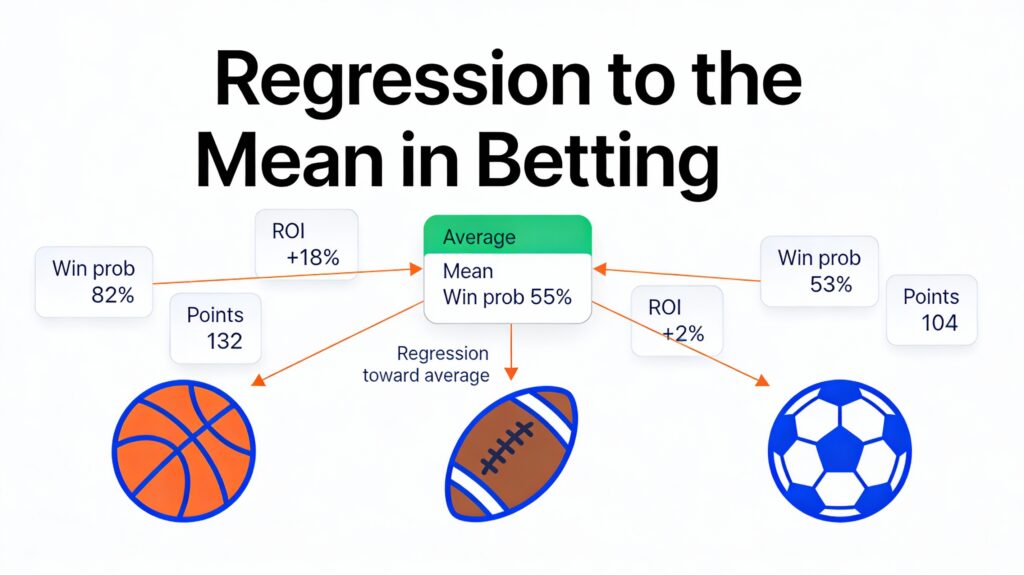
What Is Regression to the Mean?
Regression to the mean is a statistical concept that states:
Extreme results are likely to be followed by more moderate results over time.
In simpler terms, if a team, player, or bettor performs unusually well or poorly in one game or short stretch, their performance will often move closer to their average level in subsequent games.
Example in Sports Betting
Imagine a basketball team scores 130 points in a game while their season average is 110 points. While this is an impressive performance, regression to the mean suggests that in the next game, their score is more likely to be closer to 110 rather than 130.
Similarly, if a bettor experiences a big winning streak, regression to the mean reminds us that this luck is unlikely to continue indefinitely, and future results will likely move closer to the bettor’s long-term expected value.
Why Regression to the Mean Matters in Betting
1. Avoid Overreacting to Short-Term Results
- A team winning by an unusually large margin may not continue performing at that same level.
- Bettors should avoid chasing streaks or overestimating a team’s true strength based on one or two games.
2. Helps Identify True Value
- By understanding a player or team’s historical averages, bettors can detect overperforming or underperforming odds.
- Platforms like TheOver.ai analyze long-term trends rather than just recent results to provide accurate predictions.
3. Supports Expected Value Calculations
- Regression to the mean ensures that bettors focus on probabilities and expected value (EV) rather than single-event outcomes.
- For more on EV, What Is Expected Value (EV) and Why It Matters in Betting.
Regression to the Mean in Different Betting Contexts
1. Team Performance
- Teams often have fluctuating performances due to injuries, form, or randomness.
- Example: A football team scores 5 goals in a game (way above their average of 2). The next few games are statistically likely to return closer to their seasonal average.
2. Player Performance
- Individual athletes experience hot streaks or slumps.
- Regression to the mean reminds bettors not to overreact to one outstanding or poor performance.
- Example: A quarterback throws 5 touchdowns in one game; future games are likely to reflect their career average, not repeat the extreme.
3. Betting Streaks
- Bettors themselves can experience streaks of wins or losses due to variance and luck.
- Regression to the mean emphasizes maintaining bankroll management and not increasing bet size dramatically after short-term success.
Practical Tips for Bettors
- Analyze Long-Term Data: Focus on team/player averages over multiple seasons or games.
- Be Cautious with Short-Term Trends: Avoid jumping on “hot streaks” or betting based solely on recent results.
- Use Analytics Tools: Platforms like TheOver.ai factor in historical performance, expected regression, and variance.
- Incorporate Expected Value: Combine regression insights with EV to make smart wagers.
- Avoid Emotional Betting: Streaks can create psychological bias; regression to the mean encourages rational decision-making.
Conclusion
Regression to the mean is a core principle in sports betting, reminding bettors that extreme outcomes are often temporary. By understanding this concept, analyzing long-term data, and using data-driven tools like TheOver.ai, bettors can make smarter decisions, avoid chasing streaks, and identify true value bets.
Ultimately, successful betting isn’t about winning every game; it’s about making consistent, informed decisions that account for probability, variance, and statistical regression.