In sports betting, understanding odds and lines is only part of the equation. Equally important is the concept of market efficiency, which helps bettors assess whether they are getting fair value for their wagers. Market efficiency refers to how accurately betting odds reflect the true probability of an outcome. In other words, a highly efficient market is one where the odds set by sportsbooks closely match the real chances of an event happening.
For bettors looking to gain an edge, recognizing how market efficiency works can be the difference between consistent profits and random losses. Platforms like TheOver.ai provide insights that help bettors navigate these dynamics intelligently.
What Is Market Efficiency?
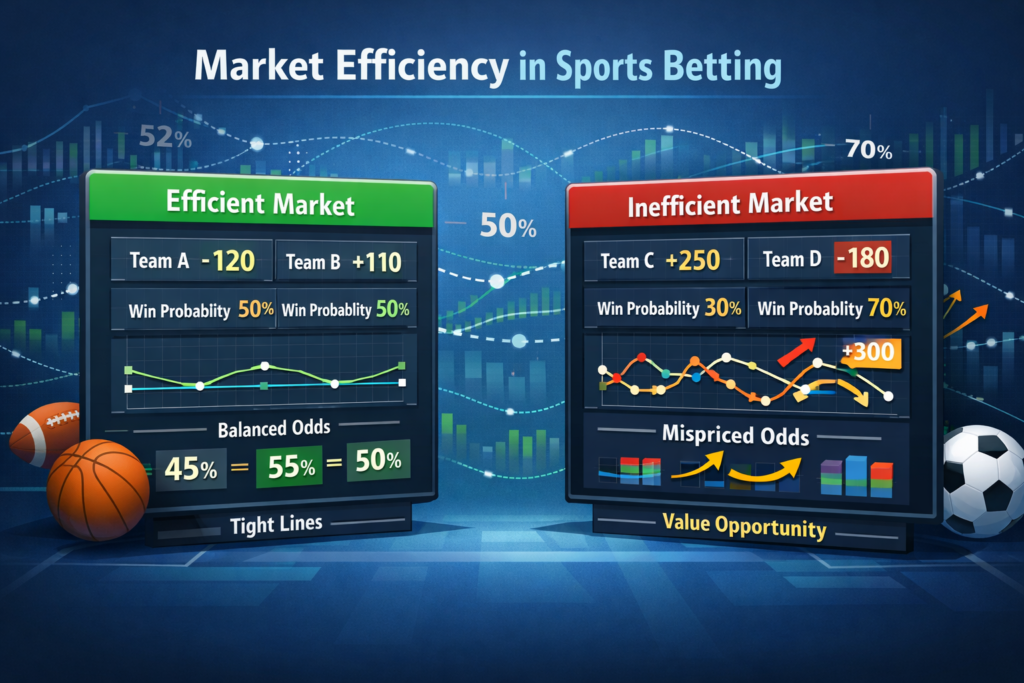
Market efficiency comes from financial theory and has been adapted to sports betting. A market is considered efficient if all available information is already reflected in the odds.
- Highly Efficient Markets: Major leagues like the NFL, NBA, and English Premier League are generally efficient because there is a lot of betting action, statistical analysis, and media coverage, making it harder for casual bettors to consistently find value.
- Less Efficient Markets: Minor leagues, niche sports, or markets with limited betting volume often present mispriced odds, offering opportunities for sharp bettors to gain an advantage.
Example:
If a sportsbook sets the odds for a football match at 2.00 (decimal odds), this implies a 50% chance for the outcome. If professional analysts and betting syndicates agree that the true chance is closer to 55%, this represents a potential value opportunity.
For more on how sharp bettors exploit inefficiencies, check out What Is a Sharp Bettor vs a Public Bettor?.
How Market Efficiency Works in Sports Betting
Sportsbooks operate like financial markets, adjusting odds based on several factors:
- Public Betting Patterns: High-volume bets from casual bettors influence line adjustments to balance the book.
- Sharp Money: Large, strategic wagers by professional bettors often indicate value and trigger line movement. For more on this, see What Are Sharp Money Indicators?.
- Injuries and News: Updated information about player availability or team dynamics is quickly reflected in the odds.
- Market Consensus: Odds across multiple sportsbooks tend to converge in highly efficient markets, similar to stock prices adjusting to new information.
Why Market Efficiency Matters
Understanding market efficiency helps bettors:
- Identify Value Bets: Knowing where odds deviate from true probabilities can reveal profitable opportunities.
- Avoid Overbetting Popular Lines: In highly efficient markets, favorites are often overpriced or underpriced correctly, leaving little edge for casual bettors.
- Inform Betting Strategy: Efficient markets favor statistical analysis and sharp money tracking over guessing.
For deeper insights on betting strategies and line movements, consider reading How Do Sportsbooks Set Betting Lines? and What Is a Steam Move in Betting?.
Examples of Efficient vs Inefficient Markets
| Market Type | Efficiency Level | Opportunities |
|---|---|---|
| NFL / NBA | High | Small, requires advanced analysis or real-time data |
| Minor Leagues | Medium/Low | Mispriced odds, better chance for sharp bettors |
| Niche Sports | Low | Significant inefficiencies, but riskier due to low liquidity |
Example:
An underdog in a minor league hockey match might be listed at +200 by the sportsbook. If data suggests they have a 60% chance of winning, this mispricing represents a profitable value bet for bettors who identify it early.
Indicators of Market Efficiency
- Tight Closing Lines: Odds rarely change dramatically before game time in efficient markets.
- Limited Arbitrage Opportunities: Highly efficient markets leave fewer exploitable mismatches between sportsbooks.
- Consistent Sharp Money Impact: Early bets from professional bettors quickly adjust the lines.
Tracking these indicators can be easier with platforms like TheOver.ai, which visualize line movement, betting volume, and sharp action across multiple markets.
Practical Tips for Bettors
- Focus on Less Efficient Markets for Edge: Look at minor leagues, overseas leagues, and niche markets.
- Compare Odds Across Multiple Books: Even efficient markets have slight differences between sportsbooks.
- Follow Sharp Money: Early bets by professionals often indicate where value exists.
- Use Data-Driven Tools: Platforms like TheOver.ai provide analytics on line movement, odds changes, and betting volume.
- Understand Expected Value: Before placing a wager, calculate the expected value relative to implied probability (Investopedia – Expected Value Guide).
Conclusion
Market efficiency is a cornerstone concept in sports betting. It dictates how quickly and accurately sportsbooks reflect real-world probabilities in their odds. For casual bettors, efficient markets may limit opportunities, but sharp bettors and data-driven strategies can uncover edges in less efficient markets.
By understanding market efficiency, tracking sharp money indicators, and using tools like TheOver.ai, bettors can make smarter, informed decisions, avoid overbetting on highly efficient lines, and identify profitable opportunities in less efficient areas.
Successful betting is not just about picking winners it’s about betting where the market underestimates or overestimates probabilities and managing risk effectively.