In sports betting, two bettors can make the same prediction and get very different results simply because one found a better price on the same wager. That practice is called line shopping, and it’s one of the most fundamental skills a serious bettor can learn.
Line shopping doesn’t require better predictions or deeper analytics it just requires discipline. Yet over time, locking in the best odds or most favorable betting line can significantly increase your profitability without changing the bets you make.
What Is Line Shopping in Sports Betting?
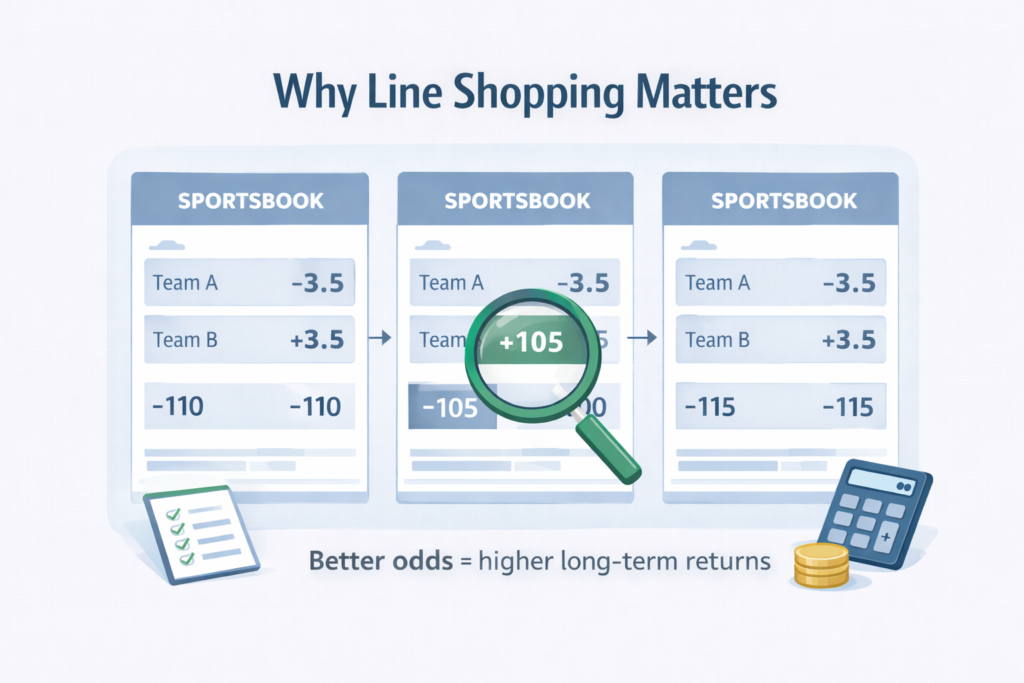
Line shopping is the practice of comparing betting lines and odds across multiple sportsbooks before placing a wager to find the most favorable price for the same bet. Rather than placing a bet where you happen to have an account or where odds were most convenient, you look for the best available terms first.
Here’s how line shopping works in practice:
- The same team may be +150 at one sportsbook and +160 at another.
- A point spread might be +6.5 at one book and +7 at another.
- Totals lines may differ slightly between apps.
If you like a particular pick, choosing the best available line means extra profit on winning bets or reduced losses on losing ones.
How Line Shopping Impacts Your Betting Results
The concept is simple: over many bets, even small differences in odds add up.
More Profit on Winning Bets
For example:
- Betting a team at +120 returns $220 on a successful $100 wager.
- Betting the same team at +130 returns $230.
That’s an extra $10 profit on a single bet, but over dozens or hundreds of similar wagers, the difference compounds.
Lower House Edge
The house advantage also known as vigorish or “vig” is built into every standard odds line. By consistently securing slightly better odds, you reduce the bookmaker’s edge against you. This is a practical way to improve long-term ROI without changing your picks.
Why Odds Vary Between Sportsbooks
Different sportsbooks set their lines based on varying models, risk tolerance, customer mixes, and proprietary data. This can lead to discrepancies in:
- Moneyline prices
- Spread values
- Totals
- Prop bet odds
Because each book operates independently, lines can vary even for the exact same event. Line shopping simply takes advantage of these discrepancies.
Examples of Line Shopping
Moneyline Shopping
If one book lists a team at +105 and another at +115, betting the latter position improves your potential return without adding risk.
Point Spread Shopping
A half-point difference in a point spread might seem trivial, but in sports where scoring margins cluster around key numbers, that half point can be the difference between a loss and a push or win.
Tools and Strategies for Line Shopping
Multiple Sportsbook Accounts
Professional bettors often maintain multiple active accounts with different sportsbooks so they can quickly compare lines before placing a bet. Without this, you simply can’t shop lines in real time.
Odds Comparison Sites
There are many third-party tools that aggregate odds from multiple books in one place. These can save time and highlight the best pricing available, though they should always be double-checked against the sportsbook directly.
Quick Decision-Making
Lines move fast, especially closer to game time and during in-play betting. Being prepared and logged in ahead of time ensures you don’t miss out on favorable numbers.
Line Shopping vs Arbitrage and Middling
Line shopping is not the same as arbitrage or middling:
- Arbitrage: betting both sides at different books for a guaranteed profit
- Middling: placing opposing spread bets where both can win if the result falls in the middle range
Line shopping simply means choosing the best price for the same bet you intend to make.
Common Mistakes Bettors Make with Line Shopping
Only Using One Book
Limiting yourself to a single sportsbook means you miss opportunities for better pricing and edge reduction.
Ignoring Odds Changes
Odds shift as information changes (injuries, weather, public bets). Failing to check lines immediately before betting can cost you value.
Not Tracking Results
If you don’t record which lines you took and where you got them, you can’t measure the real impact of line shopping on your performance.
How to Track Betting Performance Correctly
Line Shopping and Expected Value
Finding better lines doesn’t change your prediction’s correctness, but it does change the expected value (EV) of your bets.
What Is Expected Value (EV) and Why It Matters in Betting
A small improvement in odds increases your average return over time. Even a slight difference such as improving odds from -110 to -105 can noticeably improve your ROI.
Is Line Shopping Worth It?
Yes. It may seem tedious, but line shopping offers a no-risk edge. You’re not betting more often or taking riskier picks you’re simply betting the same prediction at the best price available. Over the long term, this adds up and separates disciplined bettors from casual ones.
Conclusion
Line shopping is one of the simplest yet most powerful ways to improve your sports betting results. By comparing odds and lines across multiple sportsbooks, you ensure that every wager you place has the best possible terms. This method doesn’t require complicated analytics or advanced strategies, just discipline and the willingness to look beyond your favorite betting app.
In sports betting, every percentage point of value matters, and consistent line shopping is one of the clearest ways to capture it.