In sports betting, not every matchup is evenly balanced. Some teams are clearly stronger, while others enter as underdogs. To make these games more competitive from a betting perspective, sportsbooks use a concept called the point spread.
The point spread is one of the most common and important betting tools. It helps level the playing field, creates balanced wagering opportunities, and gives bettors a way to bet on games that might otherwise feel predictable.
This article explains what a point spread is, how it works, and why sportsbooks use it, using simple, real-world examples that anyone can understand.
What Is a Point Spread?
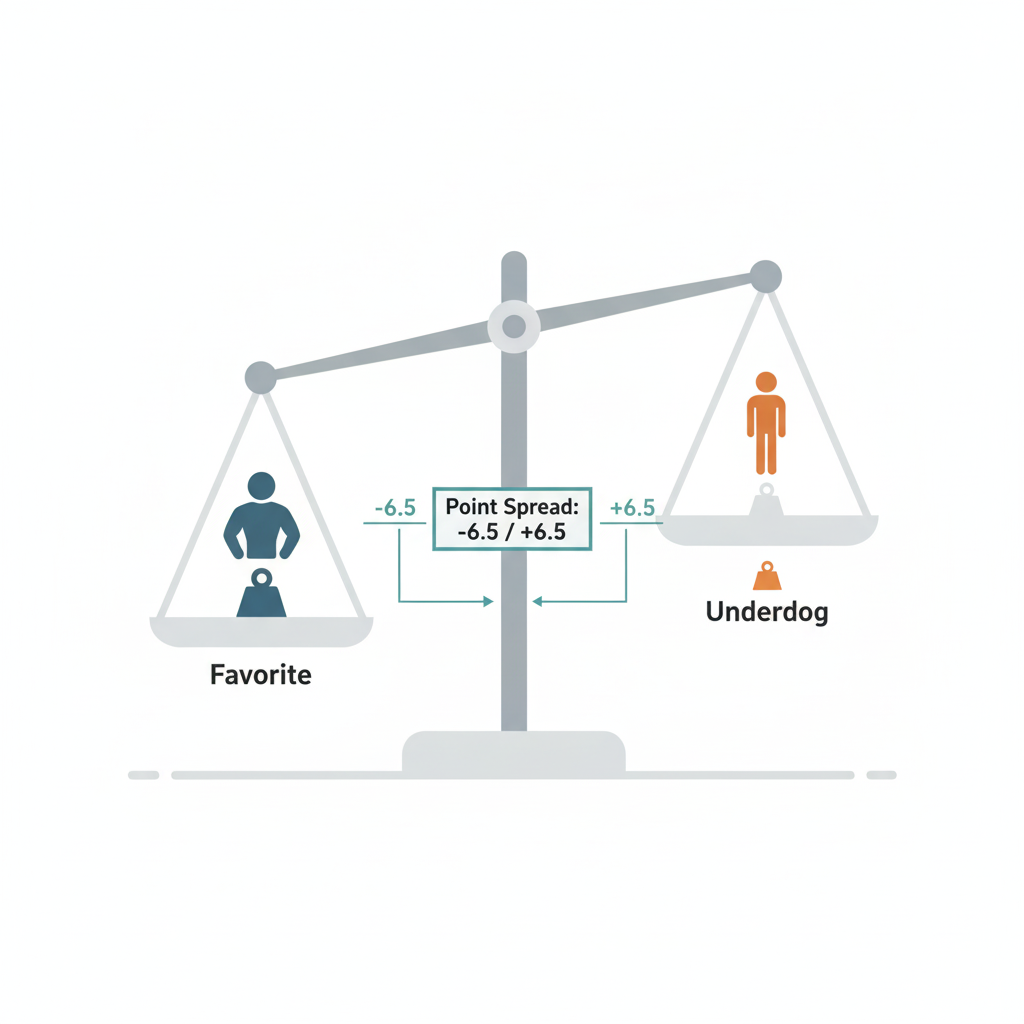
A point spread is a number set by sportsbooks that represents the expected margin of victory between two teams. It is used to handicap the favorite and give the underdog a virtual advantage.
Instead of betting on who will win outright, point spread betting asks a different question:
Will the favorite win by more than the spread, or will the underdog keep the game closer than expected?
Simple Point Spread Example
Imagine an NFL game between the Chiefs and the Panthers.
The point spread is set as:
- Chiefs -7.5
- Panthers +7.5
This means:
- The Chiefs are expected to win by more than 7 points
- The Panthers are expected to lose by fewer than 7 points or possibly win outright
How Bets Win
- A bet on Chiefs -7.5 wins only if the Chiefs win by 8 or more points
- A bet on Panthers +7.5 wins if the Panthers lose by 7 or fewer points, or win the game
The half-point (.5) eliminates ties, ensuring a clear win or loss.
Why Does the Point Spread Exist?
The point spread exists to balance betting action, not to predict the exact final score.
If sportsbooks only offered moneyline bets, most people would bet on favorites, especially in one-sided matchups. The spread makes both sides appealing by adjusting expectations.
Real-Life Analogy
Think of the point spread like a head start in a race.
If one runner is much faster, the slower runner might be given a head start to make the race competitive. The spread works the same way, creating a fair challenge for bettors on both sides.
How Sportsbooks Set Point Spreads
Sportsbooks rely on data and modeling to determine spreads, including:
- Team strength and efficiency
- Recent performance
- Injuries and lineup changes
- Home-field advantage
- Coaching styles and pace of play
- Public betting behavior
The goal is to set a number where bettors are willing to bet both the favorite and the underdog.
Platforms like TheOver.ai help bettors analyze whether a spread accurately reflects reality or if one side offers better value.
Favorites vs Underdogs Explained
What Is a Favorite?
The favorite is the team expected to win by a certain margin. When you bet on the favorite, you’re betting that the team will not only win, but win by more than the point spread.
Example:
If a team is listed at -7, they must win by 8 or more points for a favorite bet to win.
Favorites are usually stronger teams with:
- Better overall performance
- More consistent scoring
- Stronger defensive records
However, favorites don’t always cover the spread, especially in close or unpredictable games.
What Is an Underdog?
The underdog is the team expected to lose, but by a limited margin. When betting on the underdog, you’re betting that the team will keep the game closer than expected or possibly win outright.
Example:
If a team is listed at +7, they can lose by up to 7 points or win the game, and the bet still wins.
Underdogs are often attractive when:
- The spread feels inflated
- The matchup favors their style of play
- The favorite is dealing with injuries or fatigue
Simple Way to Remember
- Betting the favorite means trusting dominance
- Betting the underdog means trusting competitiveness
Understanding the difference helps bettors make smarter decisions and avoid emotional or brand-based betting.
Point Spreads Across Different Sports
NFL and College Football
Point spreads are central to football betting because:
- Scores are relatively predictable
- Margins of victory matter
- Home-field advantage plays a big role
Weather and injuries can heavily impact spreads.
NBA and College Basketball
Basketball spreads move quickly due to:
- Pace of play
- Late-game fouling
- Player rotations and rest days
Understanding tempo and efficiency is crucial.
Other Sports
Point spreads are also used in:
- Hockey (often called puck lines)
- Baseball (run lines)
- Soccer (Asian handicaps)
Each sport adjusts spreads based on scoring frequency.
For official scores, margins, and team performance data, authoritative sources like ESPN’s statistics database are commonly referenced.
Common Point Spread Mistakes Bettors Make
Many bettors misunderstand spreads, leading to avoidable losses.
Common mistakes include:
- Betting favorites without considering the margin
- Ignoring late-game scenarios like garbage-time scores
- Overvaluing star players without matchup context
- Letting team loyalty override logic
Point spread betting rewards analysis over emotion.
How AI and Data Improve Point Spread Betting
Modern bettors increasingly use AI-driven tools to:
- Compare projected margins to sportsbook spreads
- Adjust for injuries and rest schedules
- Track line movement across sportsbooks
- Identify spreads that are mispriced
This data-first approach helps bettors avoid bias and focus on value rather than popularity.
Final Thoughts: Why the Point Spread Matters
The point spread exists to turn uneven matchups into fair betting opportunities.
When understood correctly, point spreads:
- Balance risk and reward
- Make more games bettable
- Encourage analytical thinking
- Pair perfectly with AI-powered insights
Whether you’re new to sports betting or refining your strategy, understanding the point spread is essential. With platforms like TheOver.ai, bettors can analyze spreads more accurately and make smarter, data-backed decisions.