Sports betting can feel overwhelming at first, especially when faced with point spreads, moneylines, and countless betting markets. Among all these options, Totals betting, commonly known as Over/Under betting, stands out as one of the simplest and most popular ways to place a wager.
Instead of picking which team will win, totals betting asks a more straightforward question:
Will the combined score be higher or lower than a number set by the sportsbook?
This guide explains totals betting in clear, practical terms, using everyday examples so even beginners can understand how it works, why it’s popular, and how to approach it strategically.
What Does “Totals” or “Over/Under” Mean?
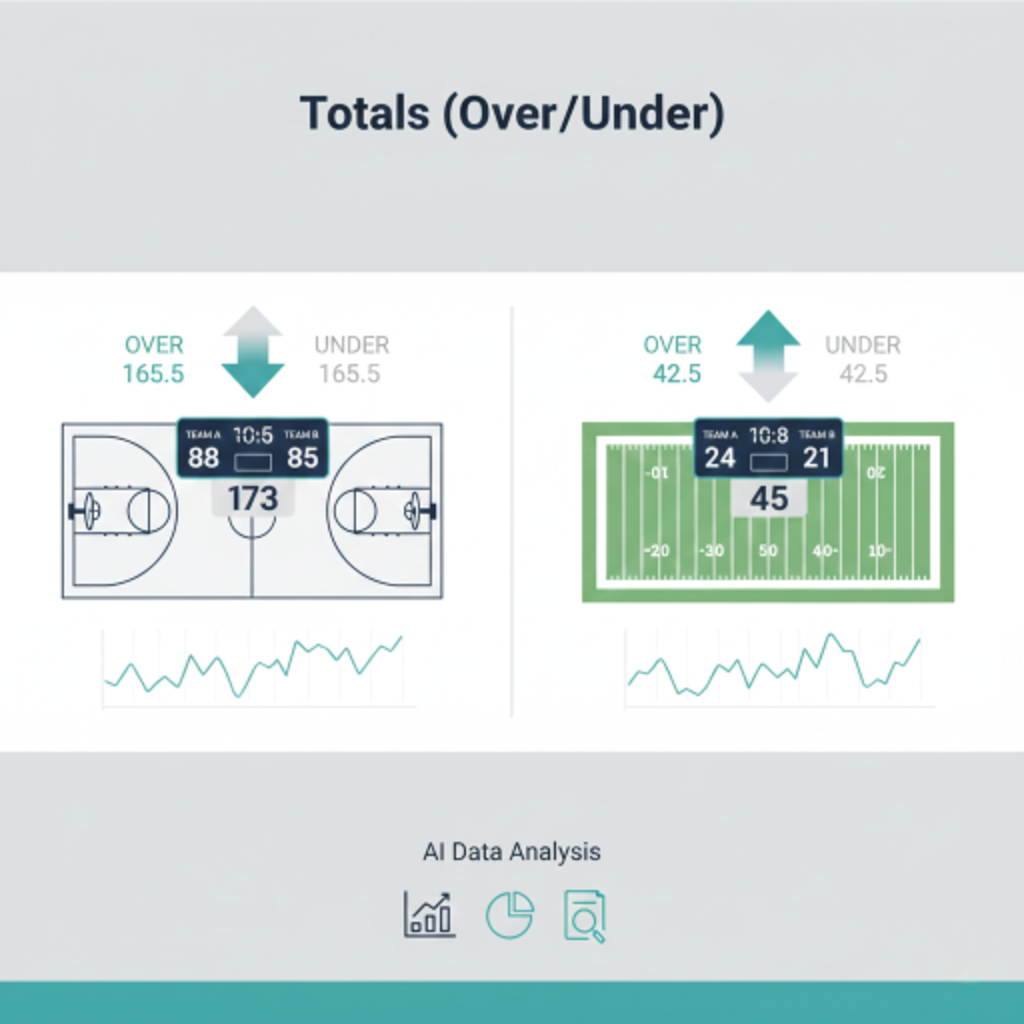
A total, also called an over/under, is a betting line set by sportsbooks that predicts the combined final score of both teams in a game.
You are not betting on a team.
You are betting on the number of points, runs, or goals scored in total.
Simple Example
Imagine an NBA game between the Lakers and the Celtics.
The sportsbook sets the total at 221.5 points.
If you bet:
- Over 221.5 → You win if the total score is 222 or more
- Under 221.5 → You win if the total score is 221 or less
If the final score is Lakers 112, Celtics 110, the total is 222.
An Over bet wins.
This is why totals are popular. You don’t need to predict the winner, only the game’s scoring outcome.
Why Totals Betting Is So Popular
totals betting has grown in popularity because it’s simple, intuitive, and fun, even for people who aren’t hardcore sports analysts. Instead of trying to predict a winner, bettors focus on the game’s scoring outcome, which many find easier to understand.
People naturally ask themselves questions like:
- “Will this game be high-scoring or low-scoring?”
- “Are the teams playing offensively or defensively?”
- “Will weather or player injuries affect scoring?”
These are the same questions fans already consider when watching sports, making totals betting feel familiar.
Another reason for its popularity is flexibility: you can bet on totals across multiple sports basketball, football, baseball, soccer and even place live, in-play bets as the game unfolds.
How Sportsbooks Set Over/Under Lines
Sportsbooks don’t just guess the total score they rely on data, analytics, and expert modeling to set over/under lines that are both accurate and balanced. The goal isn’t to predict the exact final score but to create a line that attracts balanced betting on both sides.
Key factors sportsbooks consider include:
- Historical scoring data: Past games between the teams, scoring trends, and typical point totals.
- Team pace and playing style: Fast-paced teams usually result in higher scores; slow, defensive teams lead to lower totals.
- Offensive and defensive efficiency: How effective teams are at scoring and preventing points.
- Injuries and lineup changes: Missing key players can drastically change the expected total.
- Weather conditions (for outdoor sports): Rain, wind, or snow can suppress scoring in football or soccer.
- Public betting behavior: Adjustments are sometimes made based on how people are betting to balance risk.
Example:
For an NFL game, a sportsbook might set the total at 44.5 points. Based on historical matchups, team stats, and current conditions, they expect the final combined score to be close to that number. The line is designed to encourage bets on both Over and Under, which helps the sportsbook manage risk.
By understanding how these lines are set, bettors can better analyze whether the number is realistic or if there’s an opportunity to take advantage.
Over vs Under: How Bettors Think Differently
Betting the Over
Over bettors often look for:
- Fast-paced teams
- Weak defenses
- High shooting efficiency
- Favorable weather conditions
- Games with playoff or rivalry intensity
Day-to-day analogy:
Betting the over is like expecting a busy restaurant on a Friday night. You know the demand is high, so you anticipate more activity.
Betting the Under
Under bettors focus on:
- Strong defensive matchups
- Slow-paced teams
- Key offensive players missing
- Bad weather like rain or strong winds
- Fatigue from back-to-back games
Totals Betting Across Different Sports
Totals betting exists in nearly every major sport, but how it works varies slightly.
NBA and College Basketball
Totals are heavily influenced by:
- Pace of play
- Three-point shooting volume
- Defensive efficiency
- Referee tendencies
Basketball totals often move quickly, making timing important.
NFL and College Football
Football totals depend on:
- Weather
- Quarterback play
- Coaching philosophy
- Red zone efficiency
For official scoring data and team statistics, reputable sources like ESPN’s statistics database help bettors understand scoring trends.
MLB (Baseball)
In baseball, totals are called run totals and are influenced by:
- Starting pitchers
- Bullpen strength
- Ballpark dimensions
- Wind direction and temperature
MLB totals require deeper analysis but reward bettors who understand pitching matchups.
Live Totals Betting Explained
Live or in-play totals allow you to bet while the game is happening.
For example:
- A basketball game starts slow
- The live total drops from 224.5 to 216.5
- You believe scoring will pick up
- You bet the over at a lower number
Common Mistakes Bettors Make With Totals
Many bettors lose not because totals are difficult, but because they approach them incorrectly.
Common mistakes include:
- Ignoring pace and possessions
- Overreacting to recent high-scoring games
- Betting overs only because they feel more exciting
- Not accounting for injuries or late lineup changes
- Chasing steam without understanding why a line moved
Totals betting rewards patience, research, and discipline more than emotion.
How Data and AI Improve Totals Betting
Modern bettors no longer rely solely on gut instinct.
AI-driven platforms analyze:
- Thousands of past games
- Real-time lineup updates
- Advanced metrics like true shooting percentage and pace-adjusted efficiency
- Market movement across sportsbooks
This is where https://www.theover.ai/ provides a competitive advantage, helping bettors move beyond guesswork into data-backed decision-making.
For a deeper understanding of probability and betting theory, educational resources from established sportsbooks can also be useful. https://ejaw.net/sportsbooks/
Are Totals Bets Good for Beginners?
Yes. Totals betting is often recommended for beginners because:
- You don’t need to know which team is better
- The rules are easy to understand
- Analysis applies across multiple sports
- Emotional bias toward a favorite team matters less
Once beginners understand totals, they often find it easier to expand into other betting markets.
Final Thoughts: Why Totals Betting Matters
Totals betting simplifies sports wagering by focusing on how the game unfolds, not who wins.
When approached correctly, totals betting:
- Encourages analytical thinking
- Reduces team-based bias
- Rewards understanding of tempo, efficiency, and context
- Pairs perfectly with AI-driven insights
Whether you’re new to sports betting or refining your strategy, mastering totals is a foundational skill.
I