In sports betting, not all money is created equal. Sharp money represents wagers placed by professional bettors who consistently identify value and maintain long-term profitability. Recognizing sharp money indicators allows casual and recreational bettors to align their strategies with professional insights, helping them spot opportunities and avoid overvalued lines.
Understanding Sharp Money
Sharp money comes from bettors who:
- Analyze statistics, trends, and probability to identify value
- Bet strategically to maximize expected value (EV)
- Maintain strict bankroll management and disciplined staking
- Often influence sportsbook lines due to large, timely wagers
Unlike public or recreational bettors, sharps do not bet based on emotion, team loyalty, or hype. Instead, their actions reveal market sentiment and line value. Sportsbooks monitor sharp money closely and may adjust odds or limits when significant action occurs.
Common Sharp Money Indicators
Detecting sharp money is not always straightforward, but several indicators signal professional betting activity.
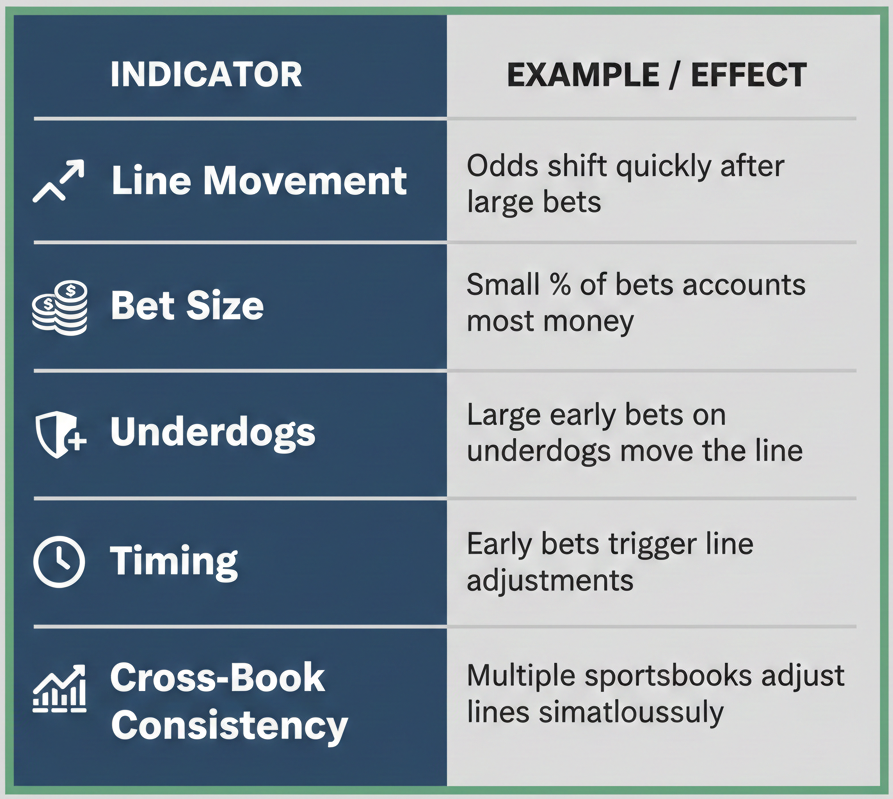
1. Line Movement
A sudden change in odds or point spreads across multiple sportsbooks can indicate sharp money. This is often referred to as a Steam Move. Key signs include:
- Rapid line changes within a short timeframe
- Consistency in movement across multiple books
- Disproportionate changes relative to public betting patterns
Example: The point spread for an NFL game opens at -3 for Team A. Heavy betting on Team A by sharp bettors moves the line to -6 in less than an hour.
2. Betting Volume Discrepancy
When a small percentage of bets accounts for a large portion of money wagered, it often indicates professional action. This is because sharps typically place larger wagers compared to recreational bettors.
Example: 20% of bets on a sportsbook make up 70% of the total money wagered, suggesting sharp money is influencing the line.
3. Sharp Money on Underdogs
Sharps often identify undervalued underdogs, which may not be obvious to casual bettors. When significant money flows to an underdog while the public favors the favorite, this is a strong sharp money signal. What Is a Sharp Bettor vs a Public Bettor?
Example: A baseball team listed at +150 receives most of the high-dollar wagers, pushing the line to +130.
4. Timing of Bets
Professional bettors usually place wagers early to secure better odds before the market adjusts. If lines move dramatically shortly after opening, it may indicate early sharp activity.
Example: NBA game opens with Lakers -4. Sharps bet early on the Clippers +4, causing sportsbooks to adjust the line quickly.
5. Limited Public Action with Large Bets
A classic sharp indicator is large bets placed when public action is minimal. If sportsbooks react to a small number of bets that are unusually large, this signals informed, professional wagering.
6. Line Consistency Across Multiple Sportsbooks
When multiple sportsbooks simultaneously adjust lines in the same direction, it often reflects sharp money influence rather than random public betting.
7. Monitoring Betting Syndicates or Professional Tools
Many sharps are part of betting syndicates or use analytics platforms to detect value. Tools like TheOver.ai help monitor line movements, detect sharp money, and provide actionable insights.
Why Sharp Money Indicators Matter
Understanding sharp money indicators is crucial for several reasons:
- Spotting Value Bets: Following sharp money can help recreational bettors identify underpriced lines.
- Avoiding Overvalued Bets: Large public bets may inflate odds; sharp money often moves against this trend.
- Timing Decisions: Recognizing early sharp action can help bettors place wagers at optimal odds.
- Improving Long-Term Profitability: By learning from sharp bettors’ patterns, recreational bettors can enhance strategy and discipline.
Examples of Sharp Money Indicators in Action
- NFL Example: Sharps place $50,000 on a small-market team with +200 odds, moving the line from +200 to +175, while public action is minimal.
- NBA Example: A point spread shifts from -5 to -8 within an hour due to early bets by sharps on the underdog.
How to Track Sharp Money
- Use Multiple Sportsbooks: Compare lines across platforms to see early or significant movement.
- Follow Professional Tools: Platforms like TheOver.ai provide real-time analytics on line movement and money flow.
- Observe Betting Patterns: Look for large bets on underdogs, early action, and moves against public sentiment.
- Combine With Personal Analysis: Always verify sharp signals with your research on teams, players, injuries, and statistics.
Common Mistakes When Interpreting Sharp Money
- Chasing lines after they’ve already moved
- Assuming sharp money guarantees a win
- Ignoring contextual factors like injuries or scheduling changes
- Focusing solely on one sportsbook without cross-checking others
Conclusion
Sharp money indicators provide valuable insights for sports bettors aiming to make informed, strategic wagers. By observing line movement, bet size, timing, and underdog activity, bettors can align their strategy with professional actions.
Key Takeaways:
- Sharp money comes from professional, value-focused bettors.
- Steam moves, timing, and large wagers are common indicators.
- Tracking sharp money improves betting strategy, value identification, and long-term profitability.