Same-Game Parlays (often called SGPs) have become one of the most popular bet types in modern sports betting. They let bettors combine multiple selections from the same game into a single wager—often with eye-catching payouts.
While SGPs can be exciting and convenient, they also carry unique risks and pricing mechanics that bettors need to understand before using them regularly. This guide explains what SGPs are, how they work, why sportsbooks love them, and when (if ever) they make sense.
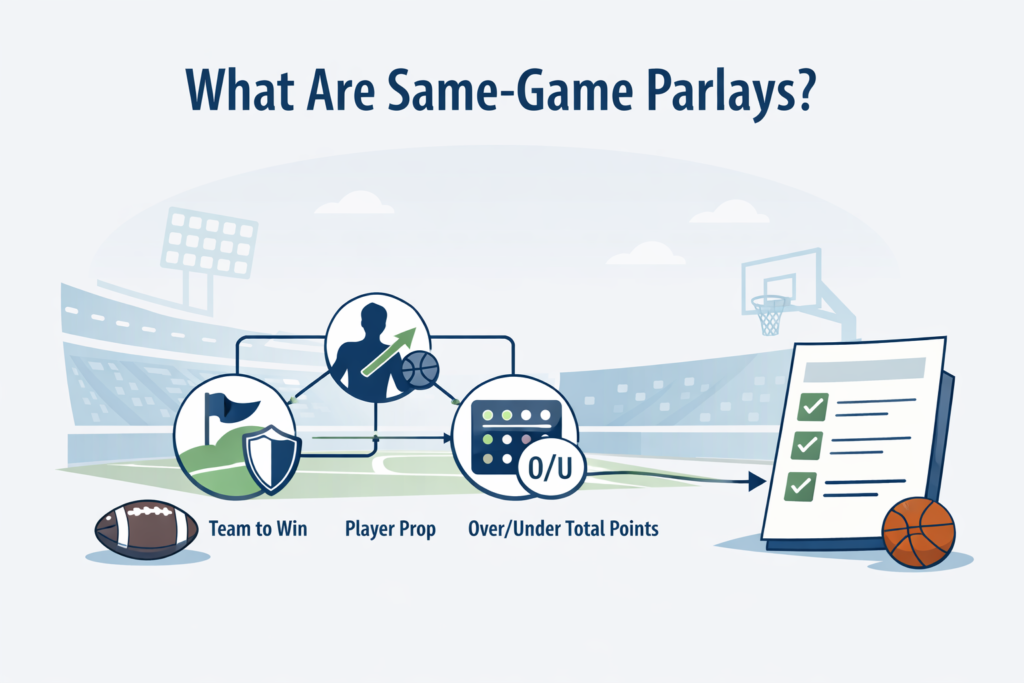
What Is a Same-Game Parlay?
A Same-Game Parlay is a parlay that combines two or more bets from the same match into one ticket. For the bet to win, every selection must win.
Unlike traditional parlays—which usually combine bets from different games—SGPs allow you to stack outcomes that happen within a single event.
Example (NBA):
- Team A to win
- Player X over 25.5 points
- Total points over 215.5
All three outcomes must hit for the SGP to cash.
Why Same-Game Parlays Are So Popular
SGPs exploded in popularity for a few reasons:
- They’re easy to build inside sportsbook apps
- They feel personalized to how bettors read a game
- They offer large payouts from small stakes
- They’re heavily promoted with boosts and bonuses
From a user experience standpoint, SGPs are convenient and entertaining. From a math standpoint, they require caution.
How Same-Game Parlays Are Priced
This is where SGPs differ from traditional parlays.
In a normal parlay, sportsbooks often assume bets are independent. In SGPs, outcomes are usually correlated—and sportsbooks price them accordingly.
Correlation Examples:
- If a team wins, their star player scoring more is more likely
- If the game pace is high, overs on points and player stats become more likely
Sportsbooks use correlation models to adjust payouts, often lowering the odds compared to what bettors expect.
➡️ What Is Expected Value (EV) and Why It Matters in Betting
This means many SGPs look attractive but have worse EV than the same bets placed individually.
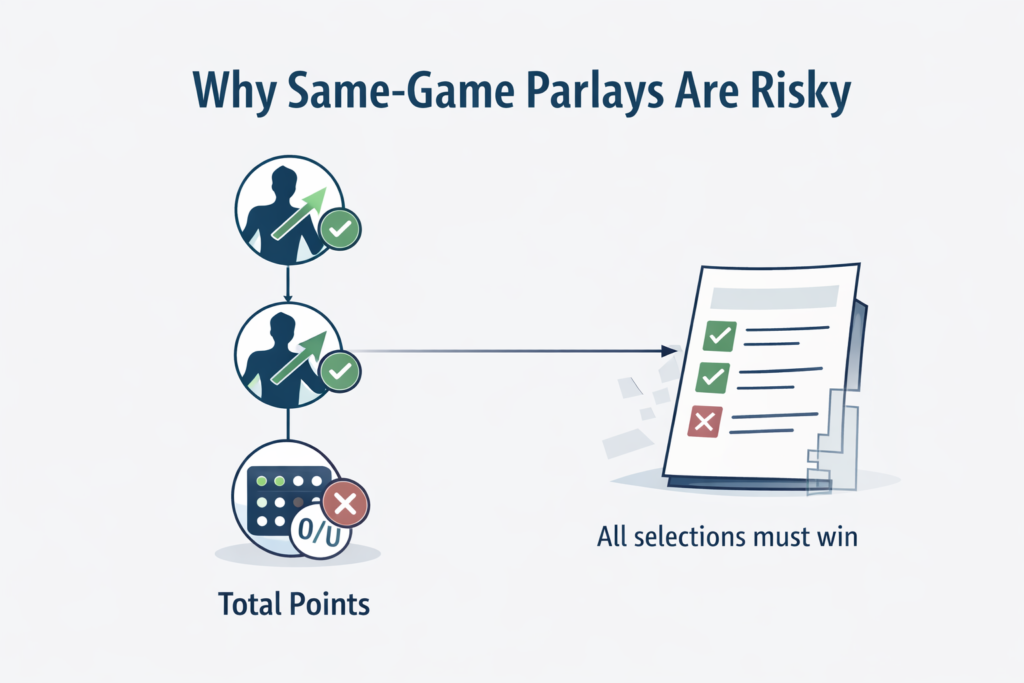
Why Same-Game Parlays Are Risky
1. All-or-Nothing Structure
Just like any parlay, one losing leg kills the entire bet—even if every other selection was correct.
2. Higher Variance
SGPs are high-variance bets, meaning results swing wildly.
➡️ What Is Variance and How Does It Affect Bettors?
You may lose many SGPs in a row and then hit one big payout, which can distort how profitable they feel versus how they actually perform.
3. Reduced Transparency in Pricing
Because correlations are priced internally by sportsbooks, it’s harder for bettors to know whether the odds are fair.
This makes it difficult to:
- Compare prices across sportsbooks
- Accurately assess value
- Track long-term efficiency
4. Sportsbooks Apply Extra Margin
SGPs typically carry higher bookmaker hold than single bets.
➡️ What Are Parlays and Why Are They Risky?
This is one reason sportsbooks aggressively promote SGPs—they’re very profitable on average.
Are Same-Game Parlays Ever Worth It?
SGPs are not inherently “bad,” but they should be used intentionally, not habitually.
Situations where SGPs can make sense:
- Small-stake entertainment bets
- Promotional boosts or free bets
- Rare mispriced correlations
Even then, they should never replace a singles-based strategy.
Same-Game Parlays vs Traditional Parlays
| Feature | Same-Game Parlays | Traditional Parlays |
|---|---|---|
| Game Scope | One game | Multiple games |
| Correlation | High | Usually low |
| Pricing Transparency | Lower | Higher |
| Variance | Very high | High |
| Bookmaker Edge | Higher | High |
SGPs are generally riskier and less efficient than standard parlays.
How to Use Same-Game Parlays More Safely
If you choose to bet SGPs, follow these rules:
- Keep stakes very small
- Limit the number of legs
- Avoid stacking highly correlated outcomes
- Track SGP performance separately
- Treat them as entertainment, not investment
Platforms like TheOver.ai help bettors track results by bet type, making it easier to see how SGPs perform compared to singles or traditional parlays.
Conclusion
Same-Game Parlays offer excitement, convenience, and big payouts—but they also come with higher variance, reduced pricing transparency, and increased sportsbook edge.
For most bettors, SGPs should be treated as occasional entertainment, not a core strategy. Understanding how they’re priced and why they’re risky helps bettors avoid overusing them and damaging long-term performance.
In sports betting, simple strategies tend to survive complex bets tend to entertain.