Parlays are one of the most popular bet types in sports betting and also one of the most misunderstood. They offer the excitement of large payouts from small stakes, but that upside comes with significant hidden risk.
Many bettors are drawn to parlays because they feel like smart bets. In reality, parlays are often where sportsbooks make the most money. Understanding what parlays are, how they work, and why they are risky is essential for anyone looking to bet responsibly and profitably.
What Is a Parlay?
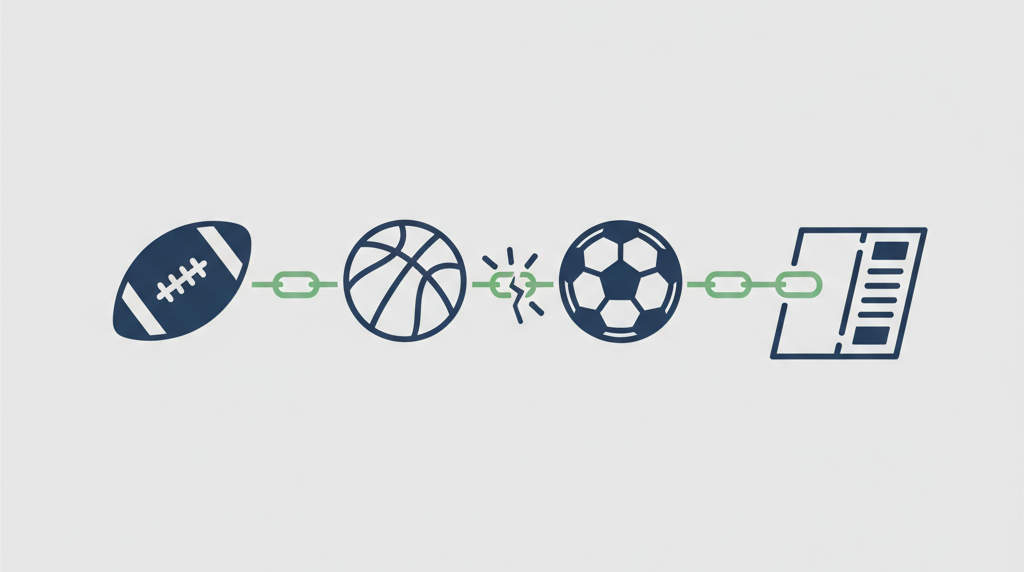
A parlay is a single bet that combines two or more individual wagers (called legs). For the parlay to win, every leg must win. If even one leg loses, the entire parlay loses.
Because the difficulty increases with each added leg, sportsbooks offer higher payouts compared to betting each selection individually.
Example:
- Team A to win
- Team B over the total
- Team C to cover the spread
All three must win for the parlay to pay out.
Why Parlays Look Attractive
Parlays appeal to bettors for a few key reasons:
- Small stakes can produce large payouts
- They add excitement and entertainment
- Winning feels skillful and rewarding
- They create the illusion of “beating the system”
However, these benefits are mostly psychological, not mathematical.
Why Parlays Are Risky
1. The Probability Drops Exponentially
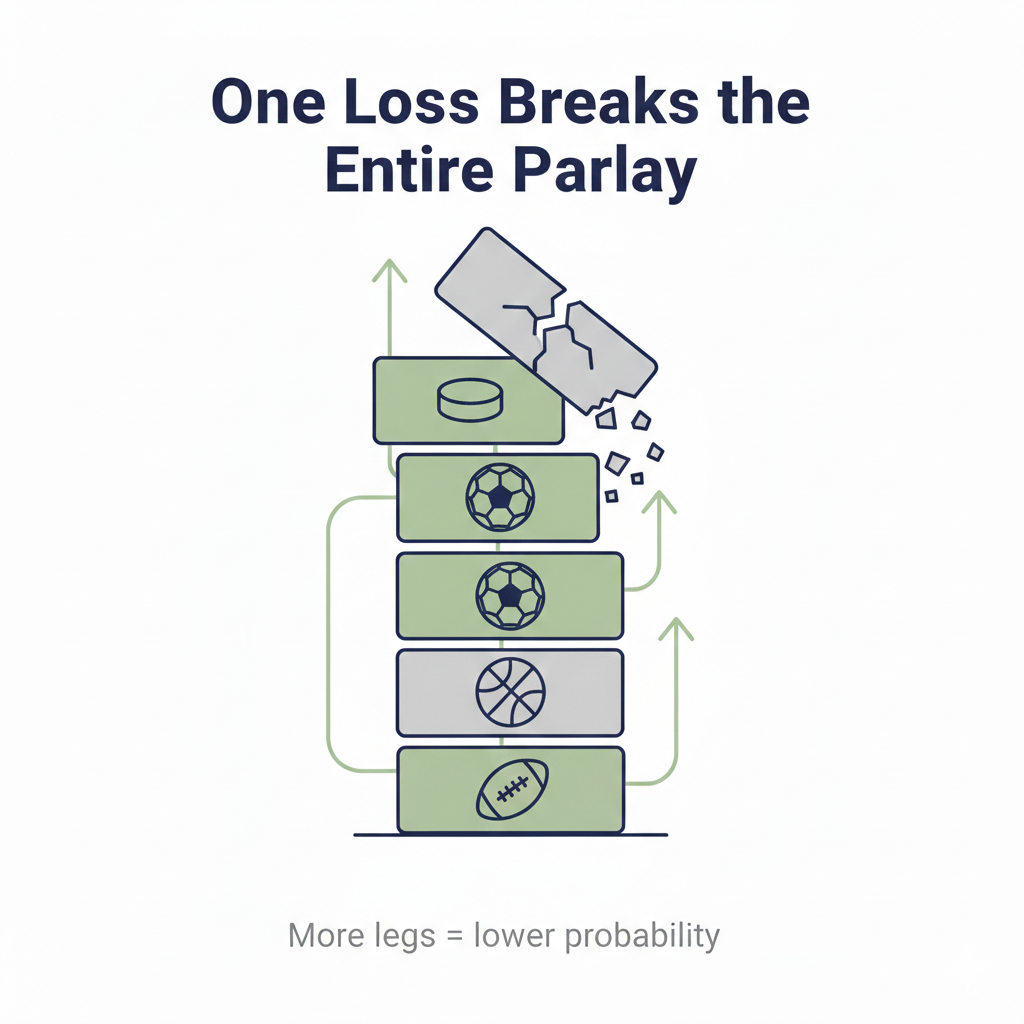
Each added leg reduces the chance of winning the entire parlay.
Example:
- A single bet with a 55% chance to win
- Two such bets combined → ~30% chance
- Three such bets → ~17% chance
Even solid individual bets become unlikely when stacked together.
2. Parlays Increase Variance Dramatically
Parlays are high-variance bets, meaning results swing wildly.
➡️ What Is Variance and How Does It Affect Bettors?
A bettor may lose many parlays in a row and then win one big payout. This volatility makes bankroll management difficult and emotionally draining.
3. Expected Value Often Gets Worse
Even if each individual bet has positive expected value, combining them usually reduces overall EV.
➡️ What Is Expected Value (EV) and Why It Matters in Betting
Sportsbooks often apply additional margins to parlays, especially with:
- Same-game parlays
- Correlated outcomes
This hidden edge makes parlays more profitable for sportsbooks than for bettors.
4. One Mistake Ruins the Entire Bet
With single bets, a mistake affects only one wager. In a parlay, one wrong leg kills the entire ticket, even if all other selections were correct.
This makes parlays especially punishing for analytical bettors who rely on consistent edges.
5. Bankroll Management Becomes Harder
Because parlays lose more often, bettors may:
- Chase losses
- Increase stakes impulsively
- Overestimate future payouts
➡️ What Is Bankroll Management for Sports Betting?
Without strict discipline, parlays can quickly drain a bankroll.
Are Parlays Ever Worth Betting?
Parlays are not always bad but they should be used sparingly and intentionally.
Situations where parlays may make sense:
- Very small stakes for entertainment
- Promotional free bets or boosts
- Rare cases where correlation is mispriced
However, they should never form the core of a serious betting strategy.
Parlays vs Single Bets
| Aspect | Single Bets | Parlays |
|---|---|---|
| Win Frequency | Higher | Much lower |
| Variance | Lower | Very high |
| Bankroll Stability | Stronger | Weaker |
| Bookmaker Edge | Lower | Higher |
| Long-Term Sustainability | Better | Worse |
This is why most professional bettors prefer singles over parlays.
How Sportsbooks Benefit from Parlays
Sportsbooks aggressively promote parlays because:
- They increase hold percentage
- Bettors underestimate risk
- Large payouts distract from low win probability
How to Use Parlays More Safely
If you choose to bet parlays:
- Keep stake sizes very small
- Limit the number of legs
- Avoid correlated outcomes
- Track parlay results separately
- Treat them as entertainment, not investment
Platforms like TheOver.ai help bettors track performance by bet type, making it easier to see how parlays actually perform compared to singles.
Conclusion
Parlays are exciting, but they are inherently risky. Each added leg dramatically lowers the probability of winning while increasing variance and sportsbook edge. While they can be fun and occasionally profitable, they are not a reliable path to long-term success.
Understanding the true risk of parlays allows bettors to make smarter decisions, manage bankrolls responsibly, and focus on strategies that actually work over time.
In sports betting, consistency beats excitement and singles beat parlays.