Key numbers are one of the most important concepts in NFL betting, yet many bettors misunderstand their role. At its core, a key number is a score differential that occurs more commonly than others in NFL games. Identifying these numbers helps bettors understand where the market naturally gravitates and how sportsbooks price point spreads.
However, key numbers are not magical. They are statistical outcomes based on how NFL games typically end. In other words, they are probability driven.
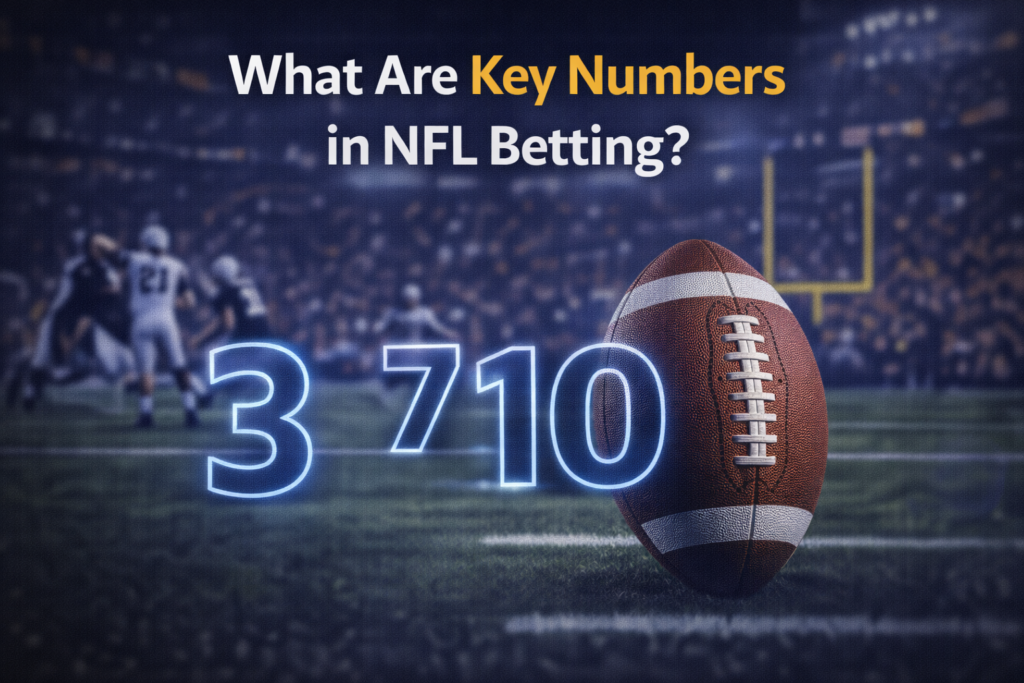
The Origin of Key Numbers
The concept of key numbers originated from football statisticians studying score distributions over decades. Certain final margin outcomes (like three, seven, and four points) appear more frequently than others. These are called key numbers.
According to historical NFL margin data, margins of 3 and 7 occur most often because they correspond to common scoring sequences such as field goals and touchdowns with extra points. For instance, a typical scoring drive ending in a touchdown plus extra point creates a seven-point swing, while field goals create three-point changes.
The Most Common NFL Key Numbers
In NFL point spreads, the most frequently referenced key numbers are:
- 3
- 7
- 10
- 4
- 6
Among these, 3 and 7 are the most critical because they align with the most common scoring increments in football. Research published on scoring patterns confirms that these margins occur significantly more often than margins such as one or two points.
When you understand why these numbers matter, you can evaluate lines intelligently.
For example, if a team is favored by 6.5 points, they must cover by more than a key number (7) to generate profit for bettors on the favorite. That extra half point around a key number matters more than many bettors realize.
Why Key Numbers Affect Point Spreads
Key numbers affect spreads because they influence implied probabilities around score distribution. Sportsbooks price lines based on expected scoring patterns derived from historical data and current team performance. When a spread lands near a key number, even a small half-point difference can significantly change the cover probability.
For example, moving a line from 6.5 to 7 can shift the break-even implied probability by several percentage points because it crosses the most common score differential.
Understanding this helps bettors:
• Evaluate whether a half point is worth the theoretical cost
• Compare their own probability estimates to market implied probability
• Make smarter decisions around game flow expectations
If you need a refresher on converting odds to probability, review How to Convert American Odds to Implied Probability.
How Key Numbers Interact With Moneylines
Key numbers matter not only for spreads but also for moneyline pricing. When a spread sits on or near a key number, sportsbooks adjust moneyline odds to reflect the increased risk for bettors.
For example, if a game opens at 7 and moves to 6.5, it signals a subtle shift in expected scoring margin, which in turn affects the implied probability on both sides. Moneyline pricing reflects that combined probability.
Further, because the NFL structure heavily rewards touchdowns (and therefore seven-point sequences), moneyline and spread interplay is more pronounced than in sports with less structured scoring increments.
This is another reason bettors should not evaluate key numbers in isolation. Always consider how margin, implied probability, and moneyline pricing interact.
Key Numbers in Totals Betting
Key numbers are less direct in totals betting, but they still matter.
Totals markets price lines based on expected combined scoring. Because NFL games frequently end around scores like 24, 27, 30, or 33, those outcomes reflect common scoring sequences (including field goals and touchdowns). These totals often align with the same increments that make 3 and 7 significant in spreads.
For example, a total of 46.5 points vs 47.5 points may change cover likelihood based on how multiple scoring events occur. In this context, understanding pace and efficiency matters more than raw key number theory.
This is where structured modeling tools like https://www.theover.ai/ become valuable. By projecting totals through offensive pace, efficiency, and situational factors, you can better evaluate whether the market reflects realistic probability or a narrative.
To dive deeper into scoring projection concepts, see How Pace of Play Affects Totals Betting.
When Key Numbers Create Value
Key numbers become strategically interesting when a line sits just above or below one. Because those numbers are statistically significant, crossing them changes the implied probability more than other yardstick movements.
For example:
- A game moving from 7 to 6.5 may benefit an underdog bettor because it avoids a key margin
- Moving from 2.5 to 3 may shift cover probability enough to justify a moneyline wager
However, value exists only when your probability estimate differs meaningfully from implied probability.
This is a core principle of probability-based betting. If you are unfamiliar with how to determine value mathematically, review What Is Expected Value (EV) and Why It Matters in Betting.
Common Misunderstandings About Key Numbers
Many bettors:
• Treat key numbers as betting signals on their own
• Assume any game near a key number is mispriced
• Ignore underlying matchup or situational context
None of these approaches are reliable.
Key numbers are descriptive of historical frequency, not prescriptive of future outcomes. They are probability identifiers, not automatic edges.
How Sharp Money Treats Key Numbers
Professional bettors treat key numbers as one variable among many. They do not bet solely on the presence of a key number. Instead, they evaluate whether hitting or avoiding a key number aligns with their own probability model.
If, for example, a spread moves from a number just above a key number to just below it, professional money may signal realignment of probabilities based on improved contextual evaluation, not emotion.
For deeper insight into how money influences lines, see How Public Betting Percentages Affect Lines.
Final Thoughts
Key numbers are one of the foundational concepts in NFL betting because they reflect the most common scoring increments in the game. Numbers like 3 and 7 appear more frequently due to the structure of touchdowns and field goals.
However, key numbers do not dictate outcomes. They serve as guides for understanding how point spreads and implied probabilities shift as lines cross significant margins.
The real solution to profitable betting is probability-based evaluation. When key number positioning aligns with your probability model, it can help you make more informed decisions. When it does not, it should not be treated as a shortcut to value.
In the end, key numbers help you understand how lines behave, but true edge still comes from comparing implied likelihood to your own probability estimates.
External Authority Reference
For more on NFL scoring tendencies and margin patterns from a trusted data perspective, see:
• NFL game data and score distributions at Pro Football Reference
• Scoring probability research at Khan Academy – Probability